
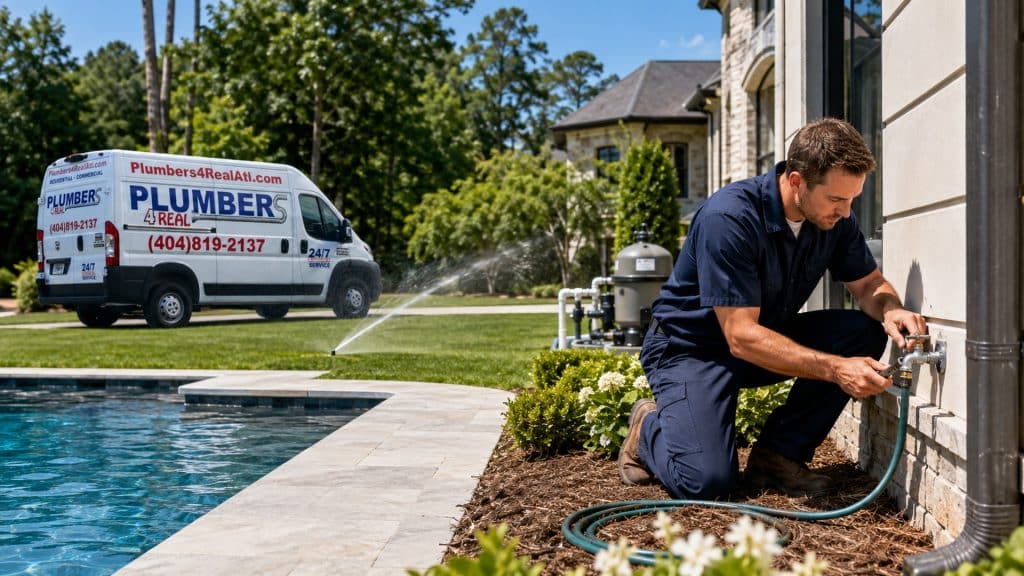
Georgia summers can put a surprising amount of stress on outdoor plumbing. Pools are running, sprinkler systems are working overtime, hoses are being used more often, and outdoor faucets may be turned on and off several times a day.
For homeowners in Marietta, a few simple checks can help prevent wasted water, unexpected leaks, and plumbing problems from interrupting your summer.
The biggest things to watch are unexplained wet spots, dripping outdoor faucets, sprinkler zones that will not shut off, falling water pressure, and pool equipment that appears to be losing water.
If you discover a major leak, burst outdoor line, or uncontrolled water flow, Plumbers 4 Real provides 24/7 emergency plumbing service throughout Marietta and surrounding communities.
Why Outdoor Plumbing Needs Extra Attention During Summer
Outdoor plumbing systems work harder during hot weather.
Sprinkler systems may run several days a week. Pools require regular circulation and refilling. Garden hoses, pressure washers, irrigation timers, and outdoor faucets all increase demand on the property’s water supply.
That additional use can expose problems that may have gone unnoticed during cooler months.
A worn valve, aging hose bib, underground leak, or weak plumbing connection may become much more noticeable once the system is being used regularly.
One of the easiest warning signs to monitor is your water bill. If water usage rises substantially without a clear explanation, an outdoor leak or continuously running fixture may be part of the problem.
Check Your Sprinkler System for Leaks and Wasted Water
A sprinkler system should deliver water where your lawn and landscaping actually need it.
Walk through the yard while each sprinkler zone is operating and look for anything unusual.
Common sprinkler problems include:
- Broken or damaged sprinkler heads
- Heads spraying onto sidewalks or driveways
- Water pooling around individual sprinkler heads
- Zones that do not fully shut off
- Weak pressure in one section of the yard
- Areas that remain unusually wet between watering cycles
- Visible erosion around sprinkler lines
- Sprinklers that take unusually long to reach normal pressure
A continuously wet area can indicate more than excessive watering. It may point to a damaged underground irrigation line, leaking valve, or plumbing connection.
Addressing these problems early can reduce water waste and help prevent soil erosion around landscaping and foundations.
Avoid Overwatering Your Lawn
Long watering cycles are not always better.
When soil cannot absorb water quickly enough, the excess simply runs away from the plants you are trying to water.
Watch for water flowing down sidewalks, across driveways, or toward the street. That is usually a sign the irrigation system is applying water faster than the soil can absorb it.
Shorter watering periods with appropriate breaks between cycles can sometimes allow water to soak into the soil more effectively.
If your sprinkler system consistently produces runoff or uneven coverage, have the system inspected for pressure, valve, and sprinkler-head problems.
Watch for Signs of High Water Pressure
High water pressure can place unnecessary stress on plumbing fixtures and outdoor components.
Hose bibs, sprinkler valves, supply lines, fittings, and other plumbing connections are all designed to operate within appropriate pressure ranges.
Warning signs of possible pressure problems can include:
- Frequent leaks at outdoor fixtures
- Noisy plumbing
- Sprinkler components failing repeatedly
- Water spraying excessively from outdoor faucets
- Fixtures that seem unusually difficult to control
A plumber can test the property’s water pressure and determine whether further evaluation is needed.
Inspect Pool Plumbing Before Small Leaks Become Big Problems
Swimming pools can lose some water naturally, but recurring wet areas around pool plumbing or equipment deserve attention.
During the summer, pool pumps, filters, valves, unions, and plumbing connections may operate for many hours each day.
Check the pool equipment area periodically for:
- Persistent wet spots
- Dripping plumbing connections
- Water around pump or filter equipment
- Cracked fittings
- Loose unions
- Air bubbles returning through pool jets
- A pump that repeatedly loses prime
- Unexplained drops in pool water level
A small leak under pressure can waste a significant amount of water over time.
Finding the source early may also help prevent damage to surrounding decking, landscaping, walls, or equipment.
Do Not Ignore a Leaking Hose Bib
Outdoor faucets are easy to overlook because a small leak outside may not seem urgent.
But hose bibs connect directly to your plumbing system, and leaks can occur at several different points.
Check for:
- Water dripping after the faucet has been turned off
- Leaks around the handle or stem
- Water appearing behind or underneath the fixture
- Moisture or staining on exterior siding
- Loose or unstable faucets
- Reduced water flow
- Water appearing inside the wall near the outdoor faucet
A dripping hose bib can waste water. More importantly, a leak behind the fixture may allow moisture to enter the wall cavity where the damage is harder to see.
If an outdoor faucet continues leaking after it is shut off, it is worth having it inspected.
Be Careful With Hoses, Timers, and Attachments
Modern homeowners connect all kinds of equipment to outdoor faucets.
That can include:
- Garden hoses
- Automatic watering timers
- Pressure washers
- Hose splitters
- Sprinklers
- Pool-filling hoses
- Drip irrigation systems
These accessories add weight and stress to the hose bib.
Avoid pulling tightly on connected hoses or allowing heavy equipment to hang directly from the outdoor faucet.
Also inspect attachments regularly. A leaking timer, splitter, or hose connection can waste substantial amounts of water even when the actual faucet is functioning correctly.
Look for Hidden Outdoor Water Leaks
Not every outdoor plumbing leak produces a dramatic spray of water.
Some underground leaks remain hidden for weeks.
Possible warning signs include:
- Grass growing faster in one isolated area
- An unusually green patch of lawn
- Soft or muddy soil during otherwise dry weather
- Water appearing near the foundation
- Unexplained standing water
- Reduced water pressure
- A water meter that continues registering usage when fixtures are off
- An unexplained increase in the water bill
These symptoms do not automatically prove there is an underground plumbing leak, but they are good reasons to investigate.
Professional leak detection can help identify the source before unnecessary digging or repairs are performed.
Protect Outdoor Plumbing Around the Home
Outdoor plumbing can also be damaged by everyday activity.
Keep heavy storage items, lawn equipment, and large planters away from exposed plumbing.
Avoid placing repeated pressure on pipes or valves, and do not allow hoses to remain stretched tightly across the yard.
If children or pets regularly use the area, make sure exposed pipes and fixtures are protected from accidental impacts.
A few minutes of prevention can help protect relatively small plumbing components from becoming expensive repair problems.
Pay Attention to Water Near the Foundation
Water consistently collecting near a foundation should not be ignored.
The source could be landscaping, drainage, irrigation, outdoor plumbing, or another water-management issue.
If an outdoor faucet, sprinkler line, or underground water line is leaking near the house, identifying the source quickly can help reduce unnecessary moisture around the structure.
Look for recurring wet areas near:
- Exterior walls
- Hose bibs
- Irrigation valves
- Utility entrances
- Pool equipment
- Landscaping beds
- Walkways and patios
If the area remains wet even when it has not rained and irrigation has not recently operated, further investigation may be warranted.
How to Tell Whether an Outdoor Plumbing Problem Is an Emergency
Not every outdoor leak requires emergency plumbing service.
A slowly dripping hose bib can generally be scheduled for repair.
A broken pressurized water line spraying large amounts of water is different.
Call for prompt plumbing help when you have:
- A burst outdoor water line
- Water flowing uncontrollably
- A sprinkler or irrigation line that cannot be shut off
- Rapid flooding near the home
- A major loss of water pressure
- Water entering the house
- A damaged main water line
- A plumbing failure threatening electrical equipment or property
If possible and safe, shutting off the appropriate water valve can help limit damage until a plumber arrives.
Simple Outdoor Plumbing Checklist for Summer
A quick inspection every few weeks can help you catch problems early.
Check the following:
- Outdoor faucets shut off completely
- Hoses and connectors are not leaking
- Sprinkler heads are aimed correctly
- Irrigation zones shut down completely
- No unexplained wet spots are appearing in the yard
- Pool equipment connections remain dry
- Water pressure appears consistent
- Exposed pipes and valves are secure
- Water is not repeatedly collecting near the foundation
- Your water bill remains reasonably consistent with normal seasonal use
You do not need to become a plumbing expert. The goal is simply to recognize when something has changed.
Frequently Asked Questions About Outdoor Plumbing
Why is my outdoor faucet still dripping after I turn it off?
A worn washer, valve component, packing material, or other internal part may prevent the faucet from sealing completely. If the fixture continues dripping, a plumber can determine whether repair or replacement is the better solution.
How can I tell if my sprinkler system has an underground leak?
Recurring wet areas, unusually soft soil, poor pressure in one sprinkler zone, unexpectedly high water usage, or a zone that does not operate normally can all justify further inspection.
Why does my pool seem to be losing water?
Some water loss occurs through normal evaporation and use. However, persistent wet areas, recurring equipment leaks, air entering the system, or unusually rapid water loss may indicate a plumbing or equipment problem that should be inspected.
Can a leaking hose bib damage my house?
Yes. A leak at the exterior spout may simply waste water, but a leak behind the hose bib can allow moisture into exterior walls or surrounding building materials.
Should I have my water pressure checked?
If you experience recurring fixture leaks, unusually forceful water flow, plumbing noise, or repeated failures of outdoor components, a professional pressure test can help determine whether excessive pressure may be contributing to the problem.
When should I call a plumber for an outdoor leak?
Call a plumber when you cannot identify or stop the source of the leak, the problem appears to involve a buried or pressurized water line, water is approaching the home, or the leak is causing significant water loss.
Keep Your Outdoor Plumbing Ready for a Marietta Summer
Pools, sprinklers, hoses, and outdoor faucets make summer more enjoyable, but they also increase the workload placed on your plumbing system.
Regularly checking for leaks, unusual pressure, wet areas, damaged fixtures, and excessive water use can help you catch problems before they become more expensive.
Plumbers 4 Real provides professional plumbing services for homeowners and businesses throughout Marietta and surrounding communities.
Need help with a leaking outdoor faucet, water line, or other plumbing problem? Call Plumbers 4 Real at 404-819-2137 to schedule service. For an urgent plumbing problem, 24/7 emergency service is available.