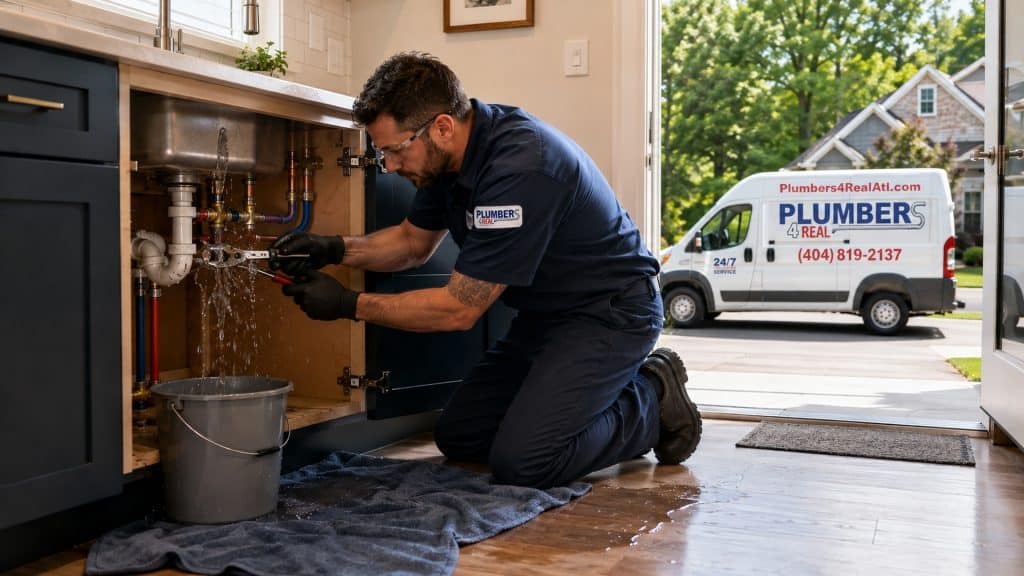
A plumbing emergency can turn an ordinary day into a stressful situation fast. A burst pipe, overflowing toilet, sewer backup, or major water leak can damage flooring, walls, cabinets, furniture, and other parts of your property if the problem is not brought under control quickly.
The most important priorities are simple: protect people first, stop the flow of water when it is safe to do so, limit additional damage, and contact a professional plumber when the situation requires immediate attention.
For homeowners and businesses in Marietta, knowing what to do before a plumbing emergency happens can make a major difference when every minute counts.
What Should You Do First During a Plumbing Emergency?
If water is actively leaking or flooding your property, your first goal should be to stop additional water from entering the affected area when you can do so safely.
A good emergency response generally looks like this:
- Identify where the water is coming from
- Shut off the affected fixture if possible
- Shut off the property’s main water supply when necessary
- Keep people away from electrical hazards
- Contact an emergency plumber
- Move valuables away from the affected area when safe
- Document visible damage
- Begin removing manageable amounts of standing water only when the area is safe
Staying focused on these priorities can help reduce additional property damage while professional help is on the way.
Know Where Your Main Water Shutoff Valve Is
One of the best things a homeowner can do before an emergency ever happens is locate the property’s main water shutoff valve.
When a supply pipe bursts or a plumbing connection fails, shutting off the main water supply may dramatically reduce the amount of water entering the home.
Depending on the property, the shutoff may be located near:
- The water meter
- A basement or crawlspace
- A utility room
- A garage
- An exterior wall
- The point where the main water line enters the building
Do not wait until water is flooding the house to learn where the valve is located.
Make sure the adults in your household know where it is and how to operate it.
Use Fixture Shutoff Valves When Appropriate
Not every plumbing problem requires shutting off water to the entire property.
Many plumbing fixtures have individual shutoff valves.
These may include:
- Toilets
- Bathroom sinks
- Kitchen sinks
- Washing machines
- Dishwashers
- Ice makers
- Some water heaters and appliances
If a toilet supply line or sink connection is leaking, shutting off water at that specific fixture may control the problem while allowing the rest of the property to retain water service.
If you cannot identify the source or stop the water locally, the main shutoff may be the better option.
Watch for Electrical Hazards
Water and electricity are a dangerous combination.
If a plumbing emergency has caused water to reach electrical outlets, extension cords, appliances, wiring, or electrical equipment, do not enter standing water or attempt to handle electrical components while wet.
Keep people and pets away from the affected area.
If you cannot safely isolate the water without approaching electrical hazards, wait for qualified assistance.
Protecting property matters, but personal safety comes first.
Move Valuables Away From the Water
Once the water source has been controlled and the area is safe to enter, move vulnerable belongings away from the affected area.
Prioritize items such as:
- Electronics
- Furniture
- Rugs
- Documents
- Photographs
- Boxes and stored belongings
- Clothing
- Items sitting directly on the floor
If water is entering from above, remember that ceiling materials can become saturated and unstable. Avoid standing underneath a visibly sagging or water-filled ceiling.
Remove Standing Water When It Is Safe
After the active plumbing leak has been stopped, removing standing water can help reduce the amount of moisture absorbed by flooring and other materials.
For a small, safe water incident, homeowners may be able to use:
- Towels
- Mops
- Buckets
- Wet/dry vacuums designed for water removal
Do not use ordinary household electrical appliances in standing water.
And if sewage is involved, avoid treating the situation like an ordinary clean-water spill. Contaminated water requires additional precautions and professional remediation may be necessary.
Documenting Damage for Insurance Claims
Take clear photographs and videos of the affected areas before major cleanup begins when circumstances allow.
Document:
- The apparent source of the leak
- Standing water
- Damaged flooring
- Wet walls or ceilings
- Damaged belongings
- Plumbing fixtures involved
- Visible pipe or appliance failures
This creates a record of what happened and the condition of the property immediately following the plumbing failure.
Which Plumbing Problems Are True Emergencies?
Not every plumbing problem requires an emergency service call.
A dripping faucet, slowly draining sink, or running toilet can often be scheduled for regular plumbing service.
The situation becomes more urgent when the problem is actively damaging the property or creating an unsafe or unsanitary condition.
Burst or Broken Pipes
A burst supply pipe can release a substantial amount of water in a short period of time.
Treat the situation urgently when:
- Water is spraying or flowing continuously
- Walls or ceilings are becoming saturated
- Flooring is flooding
- Water is entering multiple rooms
- You cannot isolate the affected line
- The main water supply must be shut off
The faster the water flow is controlled, the better chance you have of limiting additional damage.
Overflowing Toilets
A clogged toilet is inconvenient. A toilet continuously overflowing onto the floor is much more serious.
Immediately stop using the fixture and, when possible, shut off the toilet’s water supply.
Emergency service may be appropriate when:
- The toilet will not stop overflowing
- Sewage is entering the room
- Multiple toilets or drains are backing up
- The problem appears connected to the main sewer line
- The property’s only available toilet cannot be used
Sewer Backups
Sewage backing up through toilets, tubs, showers, or floor drains should be treated seriously.
Possible warning signs include:
- Multiple drains backing up simultaneously
- Sewage odors inside the property
- Wastewater coming through floor drains
- Toilets bubbling when another fixture is used
- Sewage entering showers or bathtubs
Stop using plumbing fixtures until the problem has been evaluated.
Continuing to run sinks, toilets, washing machines, or other fixtures may add more wastewater to an already overloaded or blocked drainage system.
Major Water Heater Leaks
Water heaters can also create significant plumbing emergencies.
Call for prompt help when:
- Water is rapidly escaping from the unit
- The surrounding area is flooding
- Water is approaching electrical equipment
- Plumbing connections have failed
- The tank appears damaged
- You cannot stop the water supply to the heater
A small drip and a rapidly leaking water heater are very different situations. The amount of water escaping and the risk to the surrounding property should determine how urgently you respond.
Water Leaking Through a Ceiling
Water appearing through a ceiling is a sign that something above the visible damage needs to be investigated.
Possible sources can include:
- Upstairs bathrooms
- Supply lines
- Toilets
- Water heaters
- Appliances
- Plumbing inside walls or ceilings
Avoid standing directly underneath a bulging or heavily saturated ceiling.
Stopping the water source should be the first priority.
When Can a Plumbing Problem Wait?
Some plumbing problems usually do not require emergency service when they are contained and not actively damaging the property.
Examples may include:
- A dripping faucet
- A single slow drain
- A toilet that runs but does not overflow
- A minor contained leak
- Low water pressure affecting one fixture
- A garbage disposal that has stopped working
- A single clogged sink
These problems still deserve professional attention, but they can often be scheduled during normal service hours.
Plumbing Emergency Quick Checklist
When a plumbing emergency happens, remember these steps:
1. Identify the source.
Determine where the water is coming from if you can do so safely.
2. Stop the water.
Use the fixture shutoff or main water valve when appropriate.
3. Watch for electrical hazards.
Do not enter standing water when electrical equipment may be involved.
4. Call a plumber.
Get professional help for active flooding, burst pipes, sewer backups, major leaks, or problems you cannot safely control.
5. Protect belongings.
Move furniture, electronics, documents, and valuables away from the affected area when safe.
6. Document the damage.
Take photographs and videos.
7. Begin safe cleanup.
Remove manageable clean water and improve airflow only after the immediate hazards have been addressed.
How Can You Prepare Before a Plumbing Emergency Happens?
The best emergency plan is the one created before you need it.
Take a few minutes to:
- Locate your main water shutoff
- Identify fixture shutoff valves
- Make sure valves are accessible
- Keep your plumber’s phone number saved
- Know where your water heater is located
- Periodically inspect visible supply lines
- Pay attention to unusual water bills
- Address small leaks before they become larger problems
These simple steps can make an unexpected plumbing failure far easier to manage.
Frequently Asked Questions About Plumbing Emergencies
Should I shut off the main water during a plumbing emergency?
If a supply pipe has burst or water is flowing uncontrollably and you cannot stop it at the affected fixture, shutting off the main water supply can help limit additional flooding.
Is an overflowing toilet a plumbing emergency?
It can be. A toilet that continues overflowing, releases sewage, affects other drains, or cannot be isolated should receive prompt attention.
Is a leaking faucet an emergency?
A slowly dripping faucet usually does not require emergency plumbing service. An active leak underneath the sink or inside the wall that is spreading water through the property is a different situation.
Is a sewer backup an emergency?
Yes, sewage entering a home or business should be addressed promptly because it can create unsanitary conditions and cause property damage.
What should I do if water is near electrical outlets?
Stay away from standing water and electrical equipment. Do not touch breakers, outlets, cords, or electrical devices while wet or standing on a wet surface.
Should I take pictures after a plumbing emergency?
Yes. When it is safe to do so, photographing and recording the affected areas creates useful documentation of the plumbing failure and resulting property damage.
Need an Emergency Plumber in Marietta, GA?
Some plumbing problems can wait until tomorrow. Active flooding, burst pipes, sewer backups, major leaks, and other rapidly developing problems usually should not.
Plumbers 4 Real provides emergency plumbing service for homeowners and businesses throughout Marietta and surrounding communities.
For emergency plumbing service, call Plumbers 4 Real at 404-819-2137.