
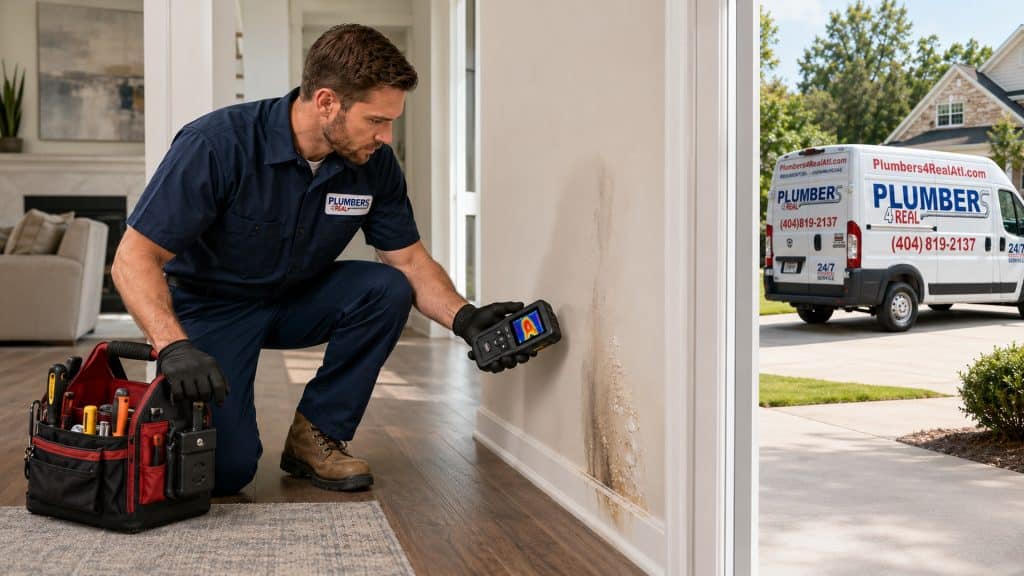
Hidden plumbing leaks are easy to miss because the water may be escaping behind a wall, underneath flooring, inside cabinetry, in a crawlspace, or beneath another part of your home.
By the time you actually see water, the leak may have been developing for days or even weeks.
For homeowners in Marietta, GA, five warning signs deserve particular attention: an unexplained increase in your water bill, musty odors, stains or damaged building materials, damp or unusually warm floors, and the sound of running water when fixtures are turned off.
Recognizing these symptoms early can help you address the source before a small plumbing leak becomes a much larger repair.
Your Water Bill Suddenly Increases
An unexpected increase in your water bill is one of the strongest clues that water may be escaping somewhere in your plumbing system.
Summer bills naturally fluctuate because of irrigation, pools, gardens, washing vehicles, and greater household water use.
The red flag is a significant increase that your normal activities do not explain.
If your household routine has stayed about the same but your water consumption suddenly rises, check for possible leaks.
Common sources can include:
- Running toilets
- Leaking faucets
- Underground water lines
- Irrigation systems
- Appliance supply lines
- Hidden pipes inside walls
- Crawlspace plumbing
A hidden leak can continue wasting water around the clock without producing an obvious puddle.
You Notice Musty Odors or Recurring Mildew
A persistent musty smell can indicate moisture accumulating somewhere that cannot easily dry.
This is especially worth investigating when the odor returns after the room has been cleaned.
Check areas around:
- Bathrooms
- Laundry rooms
- Kitchen cabinets
- Closets adjacent to bathrooms
- Water heaters
- Crawlspaces
- Plumbing walls
Visible mildew or discoloration may also indicate a continuing moisture source.
Cleaning the surface will not solve the underlying problem if leaking plumbing continues supplying moisture.
You See Ceiling Stains, Bubbling Paint, or Warped Materials
Water frequently becomes visible through changes in the materials surrounding the leak.
Look for:
- Yellow or brown ceiling stains
- Bubbling paint
- Peeling paint
- Soft drywall
- Swollen baseboards
- Warped hardwood
- Buckling laminate
- Discolored cabinetry
- Damp spots around walls or ceilings
A ceiling stain below an upstairs bathroom, for example, may indicate water escaping from a toilet, tub, shower, supply line, or drain connection above.
The visible damage is not always directly underneath the actual leak because water can travel along pipes, framing, insulation, and other building materials.
You Feel Damp or Unusually Warm Areas on the Floor
Your flooring can sometimes reveal a plumbing problem before you see obvious water.
A persistent damp area near a sink, dishwasher, tub, toilet, refrigerator, or washing machine should be investigated.
An unexplained warm area on a hard-surface floor may also deserve attention, particularly when hot-water piping runs below that area.
Watch for:
- Damp carpet
- Soft flooring
- Warm patches on tile
- Swollen flooring seams
- Darkened wood
- Moisture that keeps returning
Do not assume recurring moisture is simply humidity or something that spilled earlier.
If the same area remains damp, there may be a source underneath or nearby.
You Hear Water When Everything Is Turned Off
Your home should not sound as though water is actively flowing when nobody is using plumbing fixtures.
Listen for:
- Dripping inside walls
- Hissing sounds
- Faint running-water sounds
- Water movement beneath flooring
- Toilets refilling unexpectedly
Localized changes in water pressure may also provide a clue.
If one sink or shower suddenly has noticeably lower pressure while fixtures elsewhere remain normal, water may be escaping somewhere along that branch of the plumbing system.
Where Do Hidden Plumbing Leaks Commonly Occur?
Hidden leaks can develop almost anywhere water lines or plumbing fixtures are located.
Some common areas include:
- Behind shower and bathtub walls
- Under bathroom vanities
- Beneath kitchen sinks
- Behind dishwashers
- Refrigerator ice-maker lines
- Washing-machine supply lines
- Around water heaters
- Inside crawlspaces
- Behind toilets
- Inside exterior walls
- Beneath floors
- Underground water service lines
The source is not always obvious from where the damage appears.
That is why professional leak detection focuses on identifying the actual source rather than simply repairing the visible symptom.
How Can You Check for a Hidden Leak?
You can perform several basic checks before calling a plumber.
Look Around Plumbing Fixtures
Inspect underneath sinks and around toilets, tubs, showers, appliances, and the water heater.
Look for moisture, staining, corrosion, or damaged materials.
Listen When the House Is Quiet
Turn off faucets, appliances, and other intentional water use.
Listen for dripping, hissing, or running water.
Check Your Water Meter
With all known water use turned off, observe your water meter.
Continued usage may indicate water is still flowing somewhere in the plumbing system.
This does not tell you where the leak is located, but it can be an important clue.
Check Your Crawlspace or Basement
If your home has accessible plumbing underneath the living area, look for:
- Damp insulation
- Water stains
- Wet soil
- Dripping pipes
- Moisture around plumbing penetrations
Do not enter an area that appears unsafe or where water may be interacting with electrical equipment.
Why Hidden Leaks Can Cause So Much Damage
Visible plumbing leaks usually get attention quickly.
Hidden leaks are different.
Water may slowly spread through drywall, insulation, cabinetry, framing, flooring, and subflooring before the homeowner realizes there is a problem.
That can turn a relatively small plumbing repair into a much larger property-damage issue.
The objective is to find the leak before extensive damage develops.
How Professional Leak Detection Works
Professional leak detection is designed to narrow down the source of water loss with as little unnecessary disruption as possible.
Depending on the situation, a plumber may use:
- Moisture meters
- Thermal imaging
- Pressure testing
- Acoustic leak-detection equipment
- Visual plumbing inspections
- System isolation testing
- Inspection of crawlspaces or basements
The appropriate method depends on where the suspected leak is located and how the plumbing system is configured.
The goal is simple:
Find where the water is escaping before opening walls, floors, or other areas unnecessarily.
When Is a Hidden Leak an Emergency?
Some hidden leaks can be scheduled for prompt service.
Others require immediate attention.
Call for emergency plumbing help when:
- Water is rapidly spreading
- A ceiling is sagging or heavily saturated
- Water is approaching electrical outlets or equipment
- A pipe appears to have burst
- You cannot stop the water
- Significant flooding is occurring
- Water is moving into multiple rooms
If water is near electrical components, keep people and pets away from the affected area and avoid entering standing water.
What Should You Do If You Find a Hidden Leak?
If you discover active leaking:
- Identify the source if it can be done safely.
- Shut off the affected fixture when possible.
- Shut off the main water supply if necessary.
- Keep people away from electrical hazards.
- Move valuables away from spreading water.
- Document visible damage.
- Contact a professional plumber.
Do not open large sections of drywall or flooring simply to search for the leak unless you know exactly what you are looking for.
Targeted leak detection can help prevent unnecessary demolition.
Frequently Asked Questions About Hidden Water Leaks
How do I know if I have a hidden water leak?
Common signs include an unexplained water-bill increase, musty odors, ceiling or wall stains, bubbling paint, damp flooring, unexplained warm spots, running-water sounds, or unexpected changes in water pressure.
Can a hidden leak increase my water bill?
Yes. A plumbing leak can continue using water even when nobody in the household is intentionally running a fixture.
Can a plumber find a leak without opening the wall?
In many cases, diagnostic tools can help narrow down the location before an access opening is made. The exact method depends on the plumbing system and location of the suspected leak.
Why does my wall smell musty but look dry?
Moisture can accumulate inside a wall cavity before it becomes visible on the finished surface. A persistent unexplained odor near plumbing should be investigated.
What causes warm spots on a floor?
Several conditions can create temperature differences in flooring. When hot-water piping runs underneath the area, an unexplained persistent warm spot may justify a plumbing inspection.
Is a ceiling stain always caused by plumbing?
No. Roof leaks, HVAC condensation, and other moisture sources can also cause ceiling staining. A plumber can help determine whether plumbing is responsible when pipes or fixtures are located nearby.
Should I call a plumber if my water meter keeps moving?
If all known water use is turned off but your meter continues registering usage, further investigation is appropriate.
Do Not Let a Hidden Leak Become a Major Repair
Hidden plumbing leaks rarely improve on their own.
If your water bill suddenly rises, a room develops a persistent musty odor, flooring becomes damp, stains appear on a ceiling, or you hear water running when everything is supposed to be off, investigate the problem.
Finding the source early can help limit water waste and reduce unnecessary damage to your home.
Plumbers 4 Real provides professional leak detection and plumbing repair throughout Marietta and surrounding communities. If you suspect a hidden water leak, call 404-819-2137 to schedule service.